AI Agents for Sales: How to Automate Prospecting and Outreach in 2026
Learn how AI agents in 2026 automate prospecting and outreach with high-intent signals and hyper-personalization, saving 78% of research time.
Vigor
AI Agents for Sales: How to Automate Prospecting and Outreach in 2026
TL;DR
- AI agents in 2026 have moved beyond simple email templates to autonomous prospecting and multi-channel outreach.
- The shift is from "bulk sending" to "high-intent, hyper-personalized engagement" driven by real-time business signals.
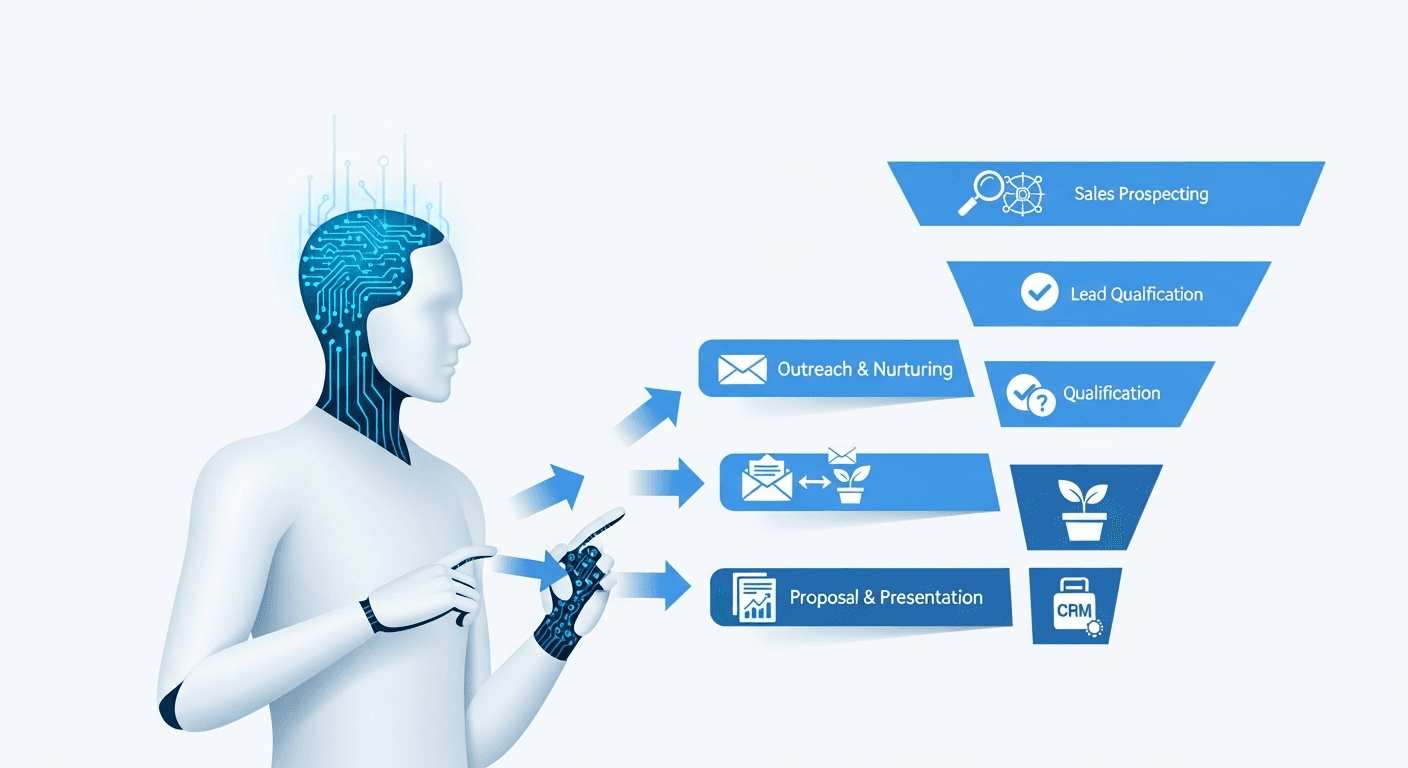
- Multi-agent systems can handle the entire funnel: one agent researches leads, another identifies triggers, and a third drafts context-aware messages.
- Mini-case: A B2B agency cut its manual prospecting time by 78% and increased positive reply rates from 3% to 11% using an agentic workflow.
- Guardrails are essential: always use human-in-the-loop for final approvals to maintain brand voice and trust.
The Death of the "Spray and Pray" Era
For a decade, sales automation meant one thing: bulk email. You bought a list, wrote a generic sequence, and hoped for a 1% reply rate. In 2026, those tactics are no longer just ineffective—they are a risk to your domain"s reputation. Advanced inbox filters and the sheer noise of AI-generated spam have made generic outreach a dead end.
The winners in 2026 are not sending more messages; they are sending smarter ones. The shift is from "automation" (doing the same thing to everyone) to "agentic sales" (doing the right thing for the right person at the right time).
An AI sales agent doesn"t just send emails. It researches the prospect"s LinkedIn, reads their recent company news, checks for relevant "triggers" (like a new job posting or a recent funding round), and only then drafts a message that feels like it was written by a human who actually did their homework.
The Three Layers of Agentic Sales
To build a high-performing sales engine in 2026, you need to move from a single script to a multi-layered architecture.
1. The Research Layer (Intelligence)
This agent lives in the data. It monitors LinkedIn, Reddit, X (formerly Twitter), and industry news. It isn"t just looking for names; it is looking for intent.
- Signal: "Company X just expanded their customer success team."
- Inference: "They might be struggling with support volume or churn management."
- Action: Add Company X to the high-priority prospecting list.
2. The Context Layer (Personalization)
Once a lead is identified, the context agent builds a "Dossier." It summarizes the prospect"s recent posts, identifies shared connections, and maps their role to your product"s specific value propositions. This ensures that the message doesn"t start with "I"d love to help you scale," but rather "I saw your recent post about the challenges of managing multi-channel support—we solved exactly that for [Competitor Y]."
3. The Outreach Layer (Engagement)
This agent manages the conversation across channels—email, LinkedIn, and even specialized platforms like Telegram or WhatsApp for established leads. It follows a SOP to Autopilot workflow: drafting the message, waiting for a human to click "Approve," and then managing the follow-ups based on the prospect"s engagement level.
Comparison: Traditional Automation vs. Agentic Sales
| Feature | Traditional Automation (2024) | Agentic Sales (2026) |
|---|---|---|
| Strategy | Volume-based (Bulk) | Signal-based (High-intent) |
| Personalization | Name + Company (Tags) | Full context reasoning (Intent-led) |
| Channels | Mostly Email | Multi-channel (LinkedIn, Email, Chat) |
| Data Sources | Static CSV lists | Real-time web and social scraping |
| Outcome | High bounce, low conversion | High relevance, higher reply rates |
| Labor | High (list cleaning & sequence building) | Low (review and approve drafts) |
Mini-Case Study: 78% Less Grunt Work, 3x Reply Rates
Context: A boutique B2B SaaS agency was struggling to fill its pipeline. A dedicated Sales Development Representative (SDR) was spending 25 hours a week manually researching leads and writing "personalized" first lines for cold emails.
The Intervention: They deployed a BiClaw-powered agentic sales workflow.
- Agent A (The Scout): Monitored LinkedIn for "Hiring Sales" or "Hiring Support" tags in the agency"s target niche.
- Agent B (The Researcher): For every hit, it compiled a 3-bullet summary of the company"s recent LinkedIn content and their CEO"s public interviews.
- Agent C (The Writer): Drafted a tailored email sequence that lead with a specific insight about the company"s recent growth.
The Results (First 30 Days):
- Time Saved: The SDR"s manual research and drafting time dropped from 25 hours to 5.5 hours per week (-78%).
- Quality Lift: The reply rate jumped from 3.2% (manual) to 11.4% (agentic).
- Pipeline Impact: They booked 14 discovery calls in the first month, compared to a previous average of 4.
- ROI: The system paid for its monthly subscription in the first 48 hours of operation.
Guardrails: Maintaining Trust and Brand Voice
Autonomous outreach is powerful, but it requires strict governance. At BiClaw, we follow the NIST AI Risk Management Framework principles to ensure your sales engine doesn"t go "rogue."
- Human-in-the-Loop (HITL): Never let an agent send an outbound message without a human clicking "Approve." This acts as a quality filter for tone and relevance.
- Rate Limits: We cap outreach to protect your domain"s reputation. 20 high-quality, high-reply messages are worth more than 2,000 ignored ones.
- Audit Logs: Every "thought" the agent has before drafting a message is logged. You can see exactly why the agent chose a specific hook or insight.
- No Hallucination Gate: The agent is required to cite its source (e.g., a specific LinkedIn post or news article) for every personal insight it includes.
Learn more about managing these systems in our guide on /blog/beyond-clawjacked-why-managed-ai-is-safer-for-business.
5 Sales Tasks to Hand to Your AI Agent Today
- Trigger Monitoring: Get an alert on Telegram whenever a target account has a major news event or job change.
- Lead Enrichment: Automatically add LinkedIn profiles and recent blog posts to every new lead in your CRM.
- Outbound Drafting: Let the agent write the first draft of your cold emails and LinkedIn invites based on real context.
- Follow-up Management: Use an agent to handle the "nudges" for prospects who have opened your email but haven"t replied.
- Meeting Prep: Have an agent deliver a "Prospect Dossier" 15 minutes before your discovery calls so you"re never caught off guard.
Conclusion: The New Sales Standard
In 2026, sales is no longer a volume game. It is an intelligence game. By moving away from "empty box" automation and toward BI-first AI assistants, you reclaim your time and build a pipeline that is resilient and high-converting.
Don"t spend your time being a data entry clerk. Start being a closer.
Related Reading:
- /blog/best-ai-agents-for-business-2026
- /blog/sop-to-autopilot-using-ai-agents
- /blog/digital-workers-for-smb-2026
- /blog/ai-agents-for-business-intelligence
Ready to fire your generic sequences and hire a sales agent? Start your 7-day free trial at biclaw.app today and see what happens when your outreach actually understands your prospects.
Sources: McKinsey: The State of AI in 2024 | NIST AI Risk Management Framework