DTC 2.0: How AI Agents Are Putting Inventory on Autopilot in 2026
A deep dive into predictive inventory management for Shopify: how AI agents automate PO drafts and reduce stockouts by 25% in the DTC 2.0 era.
Vigor
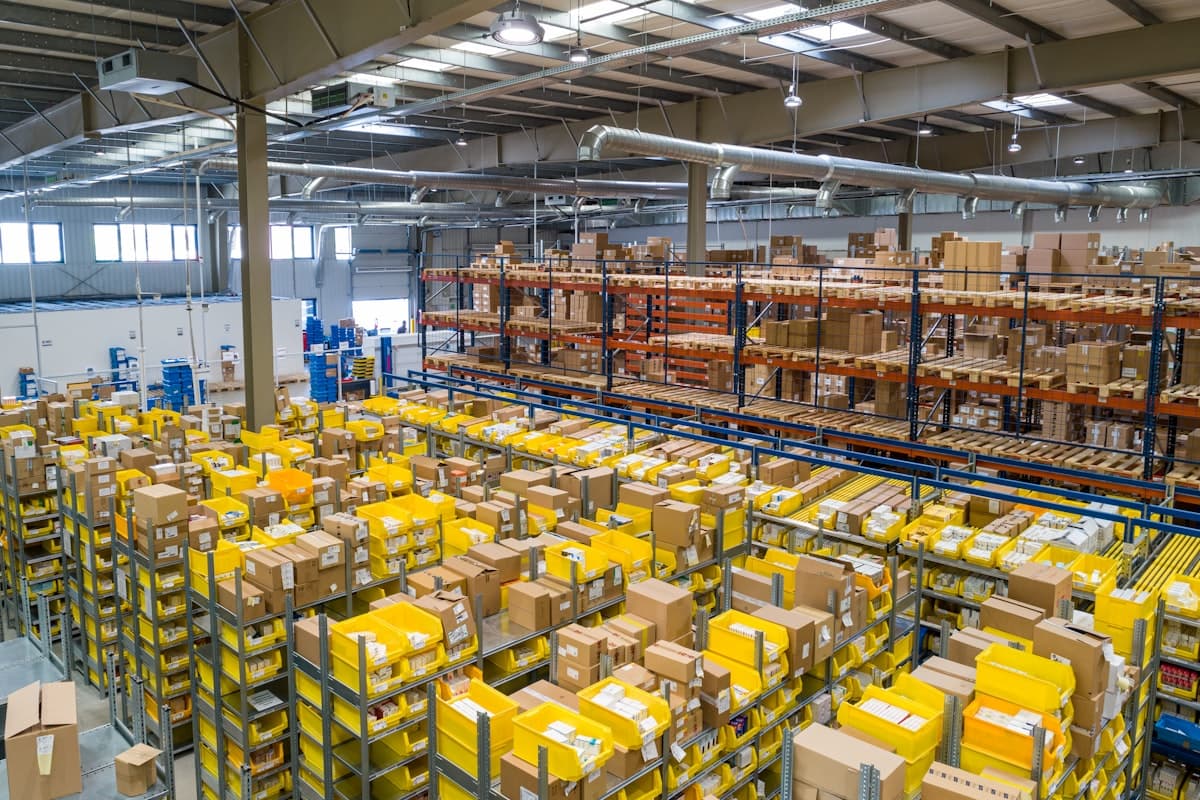
DTC 2.0: How AI Agents Are Putting Inventory on Autopilot in 2026
In 2026, the era of the "static merchant" is over. We have entered the age of DTC 2.0, where the most successful Direct-to-Consumer brands are no longer just selling products—they are operating highly efficient, AI-driven logistics machines. For years, inventory management was a reactive game of spreadsheets, "gut feel," and desperate late-night reorders. In 2026, it is becoming a proactive, autonomous operation.
This guide is a deep dive into predictive inventory management for Shopify. We will explore how AI agents are moving beyond simple customer support and into the core of your business operations: your warehouse. We’ll cover the "why," the "how," and provide a concrete implementation plan that saves hours of manual labor and thousands of dollars in lost revenue.
TL;DR
- Predictive Inventory vs. Reactive Replenishment: AI agents don't wait for stock to hit zero; they forecast demand based on sales velocity, marketing spend, and seasonal trends.
- The End of "Out of Stock": Brands using predictive agents are seeing a 15–25% reduction in stockouts and a 12% increase in average order value (AOV).
- BI-First Intelligence: Successful inventory automation requires grounding your AI in real-time Shopify and GA4 data—not just generic prompts.
- Mini-Case Study: A 12-person home goods brand saved $45,000 in 60 days by automating their purchase order (PO) drafts.
- Guardrails are Key: Never let an agent send a PO without human approval. Use the NIST AI Risk Management Framework to secure your ops.
- Internal Resources: Learn how to bridge the gap with our guides on Automating Your Shopify Morning Brief and SOP to Autopilot using AI Agents.
The Shift from Static Inventory to Predictive Agents
For the last decade, inventory management for the average Shopify store was a manual chore. You logged into your dashboard, exported a CSV of your sales for the last 30 days, did some basic math in Excel to find your "velocity," and then emailed your supplier a purchase order. If a product went viral on TikTok, you were usually 48 hours late to notice, and by then, your stock was gone.
In the DTC 2.0 model, the "Agent" is the one doing the math. An AI agent like BiClaw doesn't just wait for you to ask; it monitors your sales in real-time. It joins your Shopify Analytics with your Meta ad spend and your GA4 traffic patterns to predict when you will run out of stock—down to the specific SKU.
Why Manual Inventory is the Silent Killer of DTC
Manual inventory management is prone to two expensive errors:
- Overstocking: Tying up your precious cash flow in slow-moving items that sit in a warehouse for months, incurring storage fees and risking obsolescence.
- Stockouts: The "out of stock" button is the single biggest conversion killer. It doesn't just lose you a sale; it loses you a customer who might have become a lifelong fan.
According to Shopify’s Inventory Management Guide, stockouts cost retailers billions of dollars in lost revenue annually. In 2026, where customer acquisition costs (CAC) are at an all-time high, you cannot afford to waste a single click on an out-of-stock item.
How Predictive AI Actually Works (The Technical Bridge)
Predictive inventory management isn't magic; it's math + reasoning + connectivity. A "BI-First" AI agent operates across three distinct layers to manage your stock.
1. The Data Collection Layer
The agent starts by pulling raw data from your "Source of Truth" systems. It looks at:
- Shopify Sales: Current velocity by SKU, historical seasonality, and refund rates.
- Meta/Google Ads: Your projected ad spend for the next 14 days. If you are doubling your spend on a "Best Seller," the agent knows demand will spike.
- GA4/Traffic: Site visits and "Add to Cart" signals that haven't converted yet.
2. The Reasoning Layer
This is where the "Agentic" part happens. The AI doesn't just calculate an average; it reasons over the context. Example: "Last year, this SKU saw a 40% spike in the last week of March. We have a new influencer campaign launching on Monday. Our current stock is 450 units. At current velocity, we will hit zero in 9 days. However, with the influencer spike, we will hit zero in 4 days. Lead time from the supplier is 10 days. ACTION: Draft an emergency PO for 1,000 units now."
3. The Action Layer (The "Hands")
The agent then executes a workflow. Instead of just sending you a "Hey, you're low" alert, it prepares the work:
- It drafts the Purchase Order PDF based on your supplier's template.
- It calculates the landed cost and the impact on your cash flow.
- It sends a notification to your Telegram/Slack with a "Review & Send" button.
This transition from SOP to Autopilot using AI Agents is what separates the winners from the "empty box" setups in 2026.
Comparison: Traditional Inventory Apps vs. AI-First Agents
| Feature | Traditional Inventory App (2020-2024) | AI-First Predictive Agent (2026) |
|---|---|---|
| Logic | Static "If-Then" rules (e.g., if stock < 10) | Dynamic reasoning (velocity + marketing + seasonality) |
| Data Context | Shopify only | Multi-source (Shopify + Ads + GA4 + Weather) |
| Input Required | You set the thresholds manually | The agent suggests thresholds based on goals |
| Output | Notification / Email alert | Drafted PO + Cash flow impact report |
| Marketing Aware | No (unaware of ad spend spikes) | Yes (adjusts forecast based on ad budget) |
| Automation | Passive (waits for you to click) | Active (drafts the next move for approval) |
Many brands realize that their Business Intelligence tools need to be more than just dashboards. They need to be proactive teammates that understand the context of the entire business.
Mini-Case: $45k Saved in 60 Days (Specific Numbers)
Context: A mid-market DTC home goods brand (~$380k/mo revenue) was struggling with "The Yo-Yo Effect": they were either sitting on too much stock or scrambling with air-freight costs to restock best-sellers.
Baseline (Month 0):
- Average stockout duration: 11 days per month for top 5 SKUs.
- Manual inventory review time: 14 hours/week (founder + ops lead).
- Lost revenue (estimated): $22,000/month due to "Out of Stock" buttons.
- Emergency shipping costs: $4,500/month.
Intervention (The Predictive Pilot): They deployed a BiClaw agent focused on Predictive Inventory Triage.
- Skills: Morning Brief + Inventory Triage + PO Draft.
- Logic: Agent monitored sales velocity and joined it with the Meta Ads calendar.
- Action: Every Friday at 9:00 AM, the agent delivered a "Restock Report" to Telegram with drafted POs for anything hitting a 14-day cover threshold.
Results (Month 2):
- Revenue Protected: Stockouts on top SKUs fell from 11 days to <2 days. Estimated revenue recovered: $19,500/month.
- Shipping Savings: Emergency air-freight was eliminated because POs were sent 7 days earlier. Savings: $4,500/month.
- Labor Savings: The founder reclaimed 12 hours/week. At a $100/hr loaded rate, that’s $4,800/month in labor value.
- Cash Flow: Stock on slow-movers was reduced by 18%, freeing up $21,000 in capital.
- Total Net Benefit (60 Days): ~$45,000 in combined revenue, savings, and reclaimed labor.
This is the material impact of moving toward AI for Ecommerce Automation.
Step-by-Step Implementation Guide for Shopify Owners
You don't need a data science team to move to DTC 2.0. You just need a structured process.
Step 1: Establish Your "Source of Truth"
Your agent is only as good as the data it sees. Ensure your Shopify inventory counts are accurate and synced with your 3PL (Third Party Logistics).
- Pro Tip: Use a Morning Brief Agent to reconcile your Shopify sales with your warehouse's "Shipped" count daily.
Step 2: Define Your "Days of Cover"
What is your lead time? If your supplier takes 3 weeks to deliver, your "Minimum Threshold" should be 30 days of cover.
- The Agentic Twist: Ask your agent to calculate your weighted lead time based on the last 5 shipments. Often, what you think is 2 weeks is actually 18 days.
Step 3: Wire the Marketing Signal
Connect your ad account. This is the "missing link" in most inventory setups.
- Rule: If ad spend on SKU-A increases by >30% week-over-week, the inventory agent must automatically lower the "Days of Cover" alert threshold by 5 days to account for the incoming surge.
Step 4: Set Up the "Draft-then-Approve" Loop
Never automate the sending of money. Automate the drafting of the decision.
- The agent prepares the PO.
- The agent posts a summary to your Telegram: "SKU-B needs 500 units. Cost: $4,200. Projected stockout in 6 days. Approve?"
- You click "Approve," and the agent emails the supplier.
Learn more about this architecture in our guide on Agentic AI Architecture.
Governance: Guardrails for Your Inventory Agent
Autonomous agents are powerful, but inventory is your biggest expense. You need guardrails. We recommend following the NIST AI Risk Management Framework principles:
- Least Privilege: The agent should have
readaccess to your sales andwriteaccess to yourdrafts, but it should never haveadminaccess to your bank account or payment gateways. - Human-in-the-Loop (HITL): Every Purchase Order over $100 must be manually approved by a human.
- Audit Logs: Keep an immutable log of every calculation. If an agent suggests ordering 10,000 units of a slow-mover, you need to be able to see exactly which "signal" (e.g., a buggy GA4 spike) caused that reasoning.
- Confidence Thresholds: If the agent's forecast confidence is below 85%, it must flag the report as "High Uncertainty" and require a manual review of the raw data.
For more on keeping your setup secure, see the OpenClaw Security & Stability Guide.
The ROI of Never Hearing "Out of Stock" (CFO Math)
When you pitch this to your team or your finance head, don't talk about "AI." Talk about Net Benefit.
The ROI Formula:
[(Lost Sales Recovered + Shipping Savings + Reclaimed Labor) - AI Subscription Cost] = Monthly ROI
In 2026, the cost of a "BI-First" assistant like BiClaw is negligible compared to the cost of one missed shipment or one week of an out-of-stock best-seller. As noted in McKinsey’s GenAI Productivity Analysis, the biggest gains in the next five years will come from supply chain and operations optimization.
Conclusion: Start Your 14-Day Pilot
The transition to DTC 2.0 is a "crawl-walk-run" process. You don't need to automate your entire warehouse on day one.
- Days 1–3: Deploy a Morning Brief to get used to the data.
- Days 4–7: Enable the "Inventory Monitor" skill in read-only mode. Compare its "Stockout Warnings" to your manual checks.
- Days 8–14: Enable the "PO Draft" skill. Let the agent prepare your next restock order for review.
By the end of the second week, you will realize that you aren't just saving time—you are gaining clarity. You are moving from a state of constant logistics anxiety to a state of calm, data-driven growth.
Inventory doesn't have to be a headache. It can be an autopilot engine that fuels your brand's expansion.
Related Reading
- Best AI Agents for Business 2026: An Honest Comparison
- How to Automate Your Shopify Morning Brief
- From SOP to Autopilot using AI Agents
- AI Assistant vs Chatbot: Which One Does Your Business Actually Need?
- AI-Driven Business Intelligence for Ecommerce
Ready to put your inventory on autopilot? BiClaw ships with the BI skills and Shopify connectors you need to start predictive management today. No empty boxes. Just outcomes. Start your 7-day free trial at https://biclaw.app.
Sources: Shopify: Inventory Management Basics | McKinsey: The State of AI in 2024